
Wine storage is emerging from the cellar
Why hide the Lafite when you can have it on show?
There was only one thing that Chad Carroll’s client wanted to change upfront about the $20mn new-build home he was viewing. The Miami-based agent had found the property for the man and his young family on the mainland. The “problem” was its wine cellar, tucked away in a corner. The 6ft by 8ft space had capacity for 3,000 bottles. Still, he wasn’t satisfied. “He wanted something different,” says Carroll.
“The floor-to-ceiling glass installation is ‘more like an art piece’ that the client wants to look at every day — and show to guests”
Chad Carroll, Miami-based estate agent
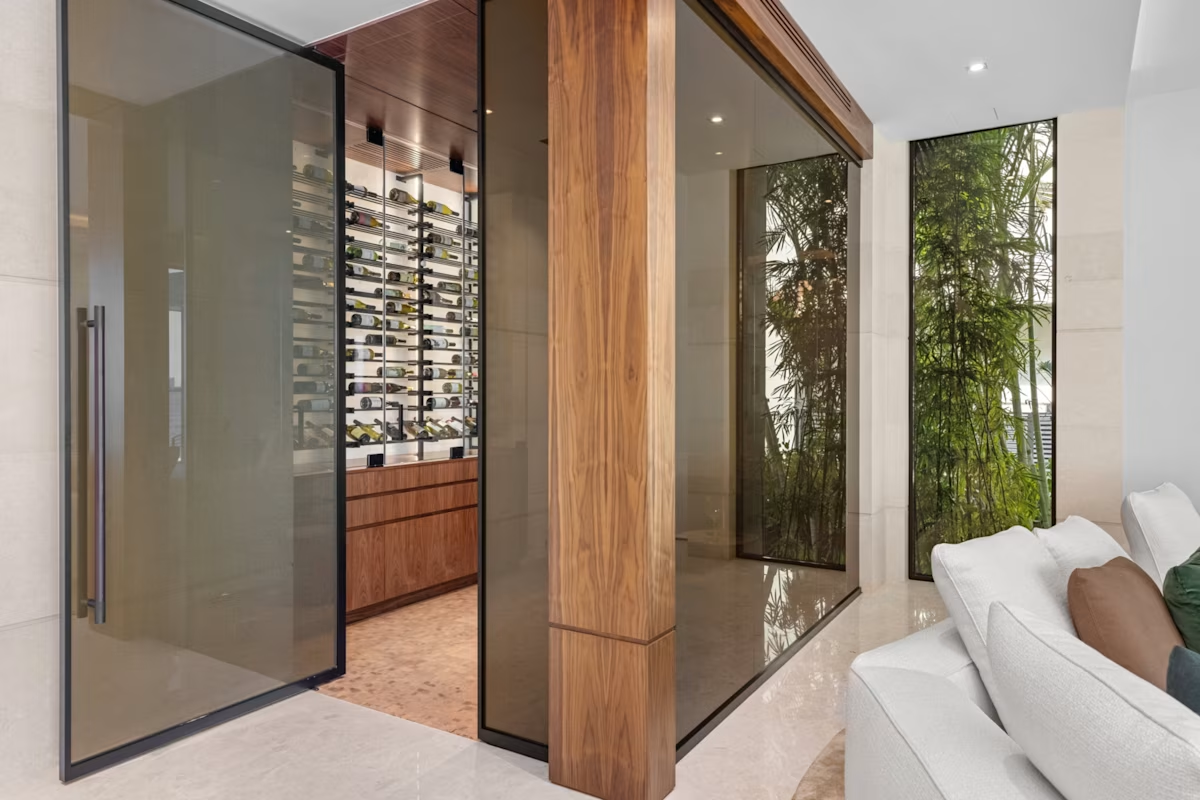
That wine room became an office and the buyer hired a specialist company to create a space for his collection that would be at the heart of the home: a floor-to-ceiling glass installation with temperature and light controls. Carroll describes the new design as being “more like an art piece”: something his client wants to see every day and which he wants to show to guests. Carroll says his client is not an outlier in wanting to make it a focal point of the home, citing high design and “glass wine walls that can easily show a collection” as a growing preference.
This shift at the very top end of the property market is driven by younger collectors, according to Knight Frank’s Liam Bailey, author of the estate agency’s Wealth Report, who says they “want to invite people into the space to enjoy it”. Though global wine consumption may be down, there’s an inevitable brag factor, adds Carroll.
The drop in numbers masks some nuances, adds Tom Burchfield, market intelligence head at wine trading platform Liv-ex. Among collectors, buying patterns have changed. Liv-ex data shows that globally, from 2015 to 2025, although volume per trade was down 59 per cent, the total number of trades increased 153 per cent. Oenophiles “are buying smaller volumes, more frequently”.
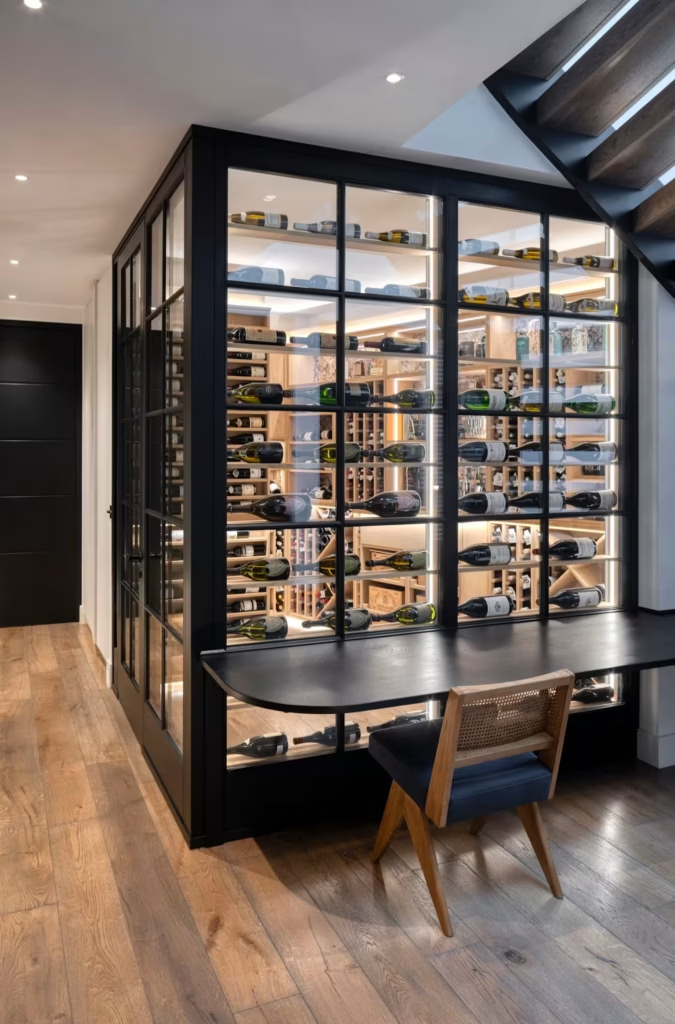
In London, architect Robert Douge recently completed a home for a private client who insisted that the 1,000-strong wine storage area be integrated into the main layout of the house; as well as the requisite environment controls, bottles are also flatteringly displayed and back lit.
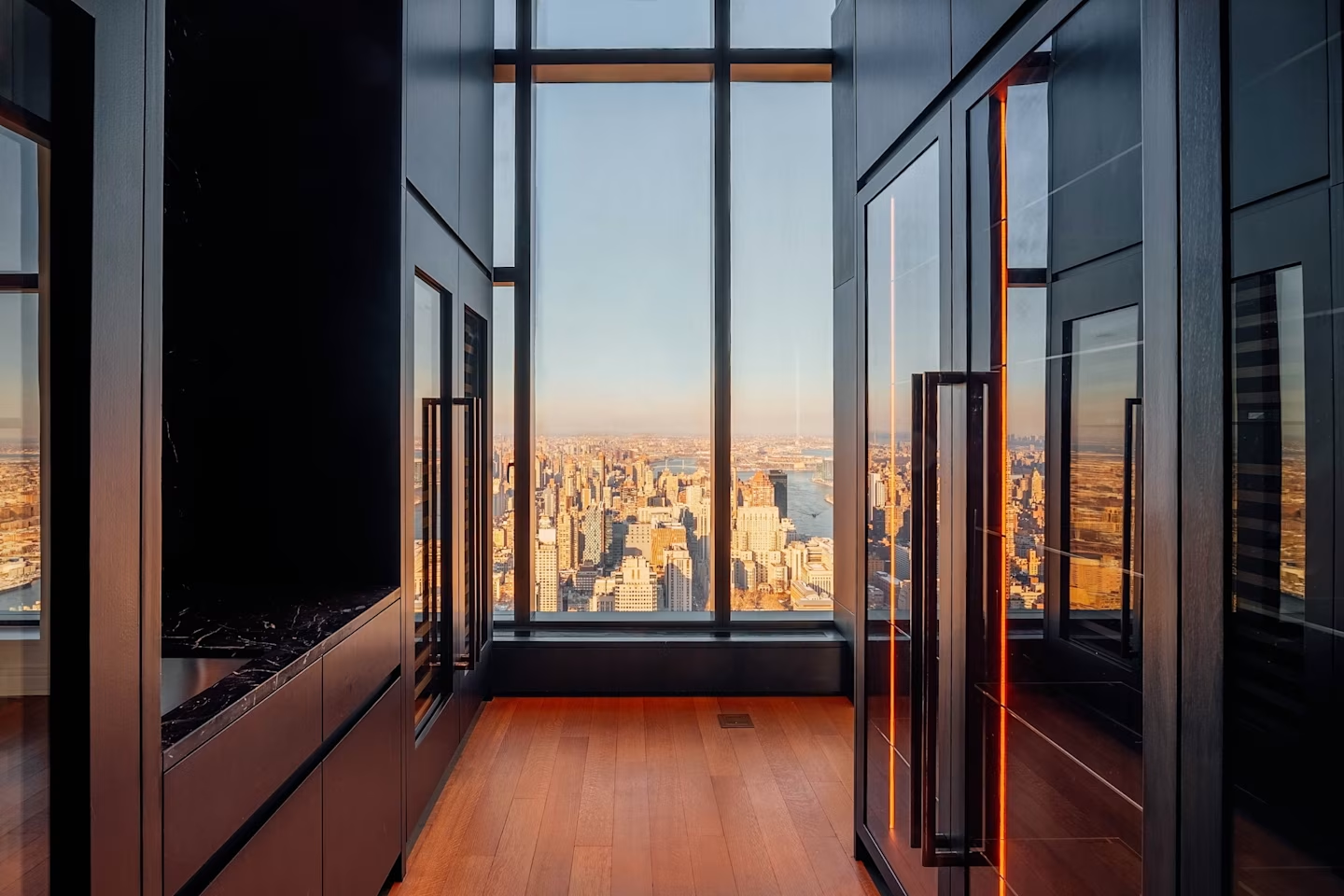
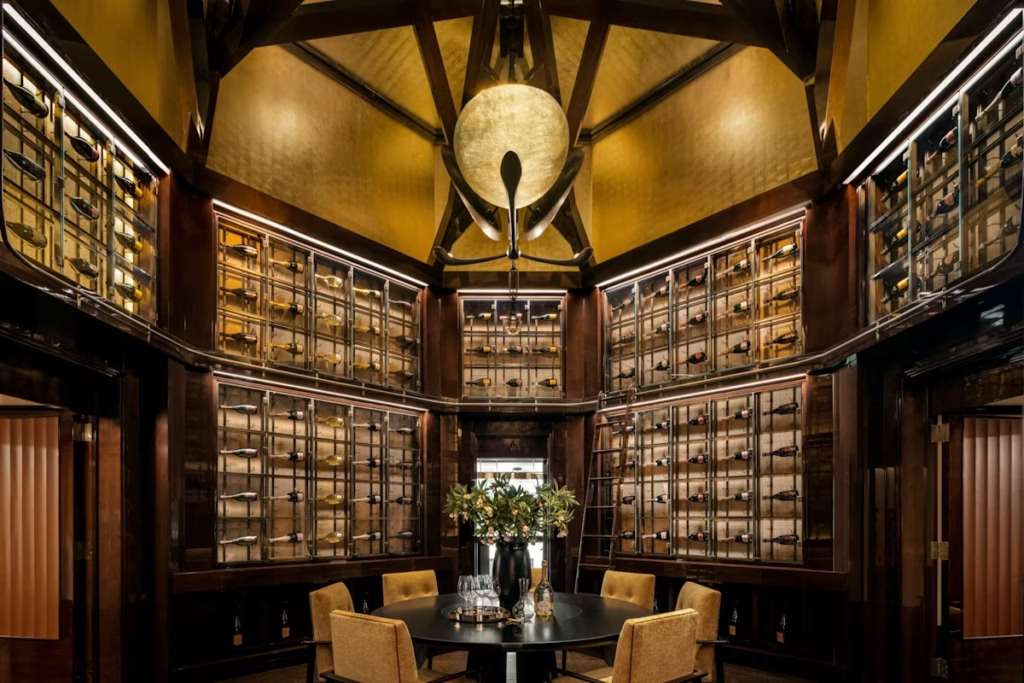
Developers are taking note. The 9,200 sq ft penthouse at the top of New York’s Sutton Tower has a wine space directly off the main room, with its windows overlooking Central Park and beyond; it can hold almost 700 bottles. At 53 West 53rd, the wine vault is designed by revered French architect Thierry Despont; residents can purchase space, and an octagonal, double-height wine room nearby can be used for tastings and private suppers.
The Reuben Brothers’ $2.5bn mixed-use development Park Elm Residences, in California’s Century Plaza, takes the trend of putting wine front and centre further. Wally’s Wine & Spirits, one of the state’s top wine brokers, will open an outpost in the complex this spring and extend its services to Park Elm residents, including private tastings and priority access to rare wines.
The building’s 12,700 sq ft penthouse, on the market for $78mn, includes a 300-bottle wine display case in the dining room, which can be ready stocked for $250,000. Robert Vardanian, director of wine purchasing and sales at Wally’s, helped pick the selection. “It’s the best of the best,” he says, including, from Châteauneuf-du-Pape, the 2016 Domaine du Pégau Les Gouttes de Dieu (only bottled in magnum), one of only 300 released worldwide.
“The days of buying multiple cases to tuck away in an off-site cellar and not see for two decades? Gratification is more immediate,” posits Vardanian. As is visual appeal. “The look” of a label and bottle “is front and centre”. These rooms are light and temperature-controlled, glass-fronted units, like super-charged wine fridges. Companies have emerged with expertise in this new kind of storage, such as Miami-based Genuwine Cellars, which can build units with backlit Lucite panels to illuminate the bottles on glass shelves suspended from metal cables, for example.
But Vardanian also points out that there is also a counter-trend: stateside, collectors worried about President Trump’s import tariffs are experimenting with storage overseas. Some châteaux will store bottles after purchase, but by no means every producer. Wally’s is offering the option of cellaring some rarefied reds at a warehouse in Beaune, while clients wait to see whether or not those levies will remain. “It’s a fluctuating situation, so when clients reach out to ask when they can expect their 2022 bottles, the answer is: ‘We want to prevent you paying that extra 15 per cent to whatever extent possible.”’
The ultimate flex, though, is to have both a hidden cellar and a showcase. Carroll cites a Florida home on the market. There are cases stored out of sight, ready to replenish the on-display selection in the heart of the living area. “It’s organised and systematic — a teaser of what’s in the cellar.”